
Turkish street food represents far more than convenient meals sold from carts and stalls across cities and countryside. It embodies centuries of culinary tradition, regional identity, and the intersection of Ottoman legacy with contemporary urban life. From the Mediterranean coast to the Anatolian interior, street food culture preserves distinctive flavors, techniques, and ingredients that define local communities and connect generations through taste.
The Geography of Turkish Culinary Tradition
Turkey’s distinct geographical regions produce remarkably different street food cultures, each shaped by local agriculture, climate, and historical trade patterns. The Mediterranean and Aegean regions emphasize fresh vegetables, olive oil, and seafood, reflecting centuries of maritime commerce and agricultural abundance. Coastal cities feature grilled fish sandwiches, stuffed mussels, and vegetable-based mezze prepared daily from local markets. Inland Anatolian regions develop heavier, grain-based foods suited to colder climates and pastoral economies, including various bread types and meat preparations that maximize preservation and nutrition.
Central Anatolia’s street food culture centers on bread, cheese, and legumes, with regional variations in spice blends and cooking methods marking village and provincial identity. The southeastern regions near Syria and Iraq incorporate more extensive use of cumin, pomegranate molasses, and sesame, reflecting cross-border cultural exchange and shared culinary practices. Black Sea communities feature anchovy-based dishes and corn preparations unknown in other regions. These geographical variations create a unified Turkish food culture that paradoxically celebrates local distinction over national uniformity.
Core Ingredients and Their Sources
Turkish street food depends on a constellation of foundational ingredients sourced from domestic production and regional trade networks. Wheat remains the backbone, transformed into countless bread varieties—from the thin, crispy lavash to the thick, seeded simit rings sold by street vendors. Bulgur, the parboiled and dried wheat grain, appears in dozens of preparations from regional salads to stuffed vegetables. Legumes including lentils, chickpeas, and beans provide protein and sustenance across all regions, often combined with grains to create complete meals.
Olive oil production in western Turkey supplies not just cooking fat but a defining flavor component across Mediterranean street foods. Tomatoes, peppers, and onions—staples of Turkish agriculture—form the flavor foundation for countless dishes. Fresh and dried herbs including parsley, mint, dill, and sumac provide aromatic complexity. Sesame seeds, coriander, cumin, and other spices reach Turkish markets through established trade routes, with certain regions developing signature spice combinations that distinguish local specialties. Dairy products, particularly cheese varieties and yogurt, appear across virtually all Turkish regions as either primary ingredients or essential condiments.
Iconic Street Food Categories and Preparations
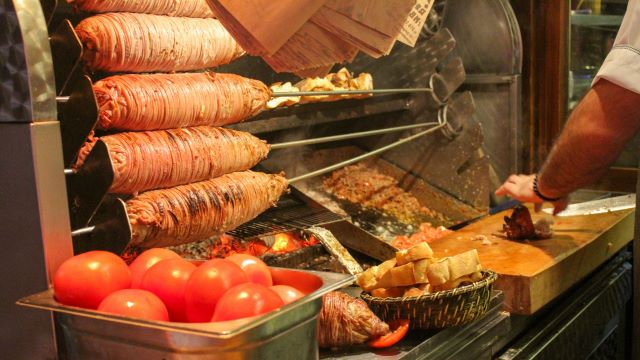
Kebab culture represents perhaps the most recognizable Turkish street food category, encompassing diverse cooking methods and regional variations. Doner kebab, the vertically rotating meat preparation, dominates urban street food across the country, served in flatbread with fresh vegetables and sauce. Shish kebab, grilled meat skewers, maintains popularity in established street food markets and neighborhood vendors. Regional kebab variants—including Adana kebab with its characteristic spice profile and hand-formed shape—demonstrate how street food adapts to local preferences while maintaining core techniques.
Filled pastries and breads form another foundational category. Börek, the savory pastry filled with cheese, meat, or vegetables, takes countless regional forms. Gözleme, the thin griddle-cooked flatbread filled with cheese or spinach, operates as both street food and home preparation across Anatolia. Pide, the boat-shaped bread topped with various ingredients, represents a middle ground between bread and topped dish. These preparations showcase how Turkish street food culture uses simple ingredients and time-tested techniques to create satisfying variety.
Chickpea-based dishes maintain particular significance in Turkish street food tradition. Hummus, the ground chickpea paste, appears across regions with subtle local variations. Falafel, the fried chickpea croquette, operates as affordable protein for working people. Roasted chickpeas sold from paper cones serve as casual snacks during street gatherings. These preparations demonstrate how a single ingredient sustains multiple expressions, allowing vendors to serve diverse customers with limited resources while maintaining nutritional value.
Markets, Vendors, and Urban Food Culture
Turkish street food thrives within established market infrastructure and vendor networks that have evolved across generations. Permanent market halls in major cities organize food vendors by category, creating spaces where customers expect consistent quality and fair pricing. Mobile vendors working from carts and stalls occupy strategic urban locations, adapting their inventory to foot traffic patterns and seasonal availability. These informal networks operate within regulatory frameworks that increasingly emphasize food safety while respecting traditional practices and economic models that support thousands of families.
The economics of street food vending support individual entrepreneurs and family businesses across Turkish society. Entry costs remain relatively modest compared to formal restaurant establishment, allowing people with limited capital to create livelihoods. Vendor networks pass knowledge intergenerationally, with children learning preparation methods and business practices from parents and relatives. This transmission preserves authentic techniques while creating employment pathways outside formal sectors. Contemporary developments in vendor regulation and market organization aim to formalize these economic activities while maintaining the accessibility and cultural authenticity that define Turkish street food.
Regional Specialties and Distinctive Preparations
Istanbul street food reflects the city’s role as a cosmopolitan hub where regional specialties converge and blend. The famous fish sandwich from vendors along the Golden Horn represents simplicity—fresh grilled fish, minimal seasoning, bread—elevated through ingredient quality and preparation skill. Istanbul bagel vendors produce simit variants distinct from other regions, with specific crust textures and sesame seed applications. The city’s diverse neighborhoods maintain vendor traditions from migrants’ home regions, creating a living map of Turkish culinary geography within a single city.
Gaziantep in southeastern Anatolia operates as a street food destination renowned for specific preparations, particularly pistachio-based sweets and distinctive kebab variations. The region’s pistachio production creates local specialties unknown elsewhere, from pistachio-filled pastries to pistachio-topped preparations that showcase local agricultural identity. Adana develops its namesake kebab—a hand-formed, spiced meat preparation grilled on open flame—as a signature preparation maintained by multiple vendors who compete through quality and technique rather than innovation.
Coastal regions from Trabzon on the Black Sea to Antalya on the Mediterranean develop fish-focused street food traditions adapted to local catch and seasonal availability. Anchovy preparations dominate Black Sea street food, with fried, grilled, and paste-based preparations reflecting the region’s fishing heritage. Mediterranean coastal vendors emphasize fresh fish grilled simply with lemon and olive oil, representing Mediterranean culinary values of ingredient quality over complex preparation.