

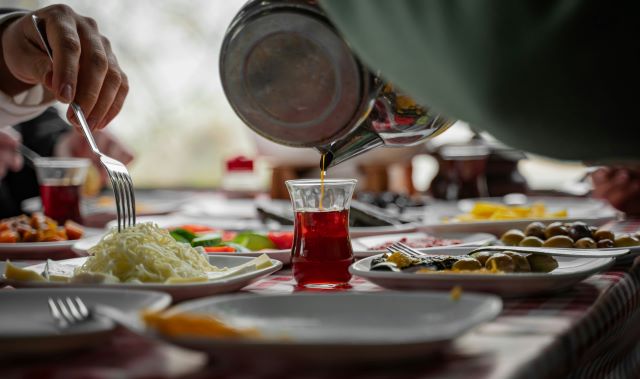
Turkish breakfast represents far more than a morning meal—it embodies a centuries-old cultural practice that shapes social bonds, family structures, and community identity across Türkiye. The elaborate spread of fresh breads, cheeses, olives, tomatoes, cucumbers, and honey reflects both agricultural heritage and a deliberate approach to beginning the day that continues to define Turkish life.
The Architecture of Turkish Breakfast
A traditional Turkish breakfast, known as kahvaltı, typically includes a distinctive array of elements designed to nourish and satisfy. The foundation consists of fresh bread—often simit, a sesame-covered roll, or soft white bread from local bakeries. Accompanying this are white and yellow cheeses, cured meats such as sucuk and pastirma, fresh vegetables including tomatoes, cucumbers, and peppers, olives in varying preparations, and honey or fruit preserves.
The practice of consuming breakfast as a substantial, leisurely affair distinguishes Turkish dining patterns from many Western cultures where breakfast is often rushed. This approach reflects underlying values about the importance of starting the day with proper nutrition and social engagement. Many Turkish families, particularly in smaller towns and rural areas, maintain traditions where multiple generations gather around the breakfast table, reinforcing family bonds and transmitting cultural knowledge across age groups.
Urban environments across major Turkish cities—from Istanbul to Ankara to Izmir—have witnessed the development of specialized breakfast establishments called kahvaltıcı. These venues have evolved into social spaces where friends, colleagues, and families congregate not only for food but for conversation and connection. The growth of this sector reflects both economic opportunity and shifting lifestyles, as more individuals work outside the home and seek communal breakfast experiences.
Tea Traditions and Daily Rhythms
Turkish tea, or çay, occupies a central position in the nation’s culinary and social framework. Consumed in small tulip-shaped glasses, often with sugar cubes or honey, tea serves as the primary beverage throughout the day—at breakfast, between meals, during business negotiations, and in evening gatherings. The tradition of tea drinking extends across all social classes and regions, creating a common cultural thread that connects diverse populations.
The preparation and serving of tea follows established conventions that carry social meaning. Tea is typically brewed in a two-chambered pot called a çaydanlık, with concentrated tea in the upper chamber diluted with hot water from the lower chamber according to individual preference. This method allows each person to customize their tea’s strength, reinforcing cultural values around personal choice and hospitality.
Tea consumption patterns reveal underlying rhythms of Turkish daily life. Morning tea accompanies breakfast and the beginning of work. Afternoon tea marks a pause in activities, offering time for reflection and social interaction. Evening tea appears in homes, cafes, and public spaces as a prelude to dinner or as an accompaniment to conversation. This consistent presence of tea throughout the day demonstrates how food and beverage traditions structure temporal experience and social interaction.
Café Culture and Public Gathering Spaces
Turkish café culture represents a distinct social institution with roots extending centuries into Ottoman history. Traditional kahvehane establishments serve primarily tea and coffee, with some offering simple foods or pastries. These venues function as gathering spaces for men of various ages to play backgammon, dominoes, or cards while engaging in conversation. The arrangement of seating, the provision of these games, and the unhurried service model all reflect cultural priorities around leisure and social engagement.
Modern café development in Turkish cities has expanded significantly, introducing European-style coffee culture alongside traditional tea establishments. Contemporary cafés serve espresso-based beverages, specialty coffees, and international food items while maintaining elements of Turkish hospitality. This evolution demonstrates how established cultures adapt and incorporate new influences without abandoning core traditions. Many urban cafés now function as workspace, social hub, and cultural venue simultaneously, serving students, remote workers, and those seeking social connection.
The distinction between traditional kahvehane and modern cafés reflects broader patterns in Turkish society where traditional practices and contemporary developments coexist. Rather than one replacing the other, both forms persist and serve different social functions and clientele. This coexistence allows individuals to choose gathering spaces aligned with their preferences while maintaining connections to cultural heritage.
Regional Variations and Agricultural Connections
Turkish breakfast and tea traditions vary meaningfully across different regions, reflecting local agricultural production and historical influences. In Black Sea regions, for instance, tea cultivation supports local economies and shapes breakfast practices around fresh-harvested leaves. Mediterranean regions incorporate olive oil more extensively into breakfast preparations, while southeastern areas feature different bread types and preserved vegetable traditions.
The connection between breakfast culture and agricultural cycles remains evident in seasonal variations of available foods. Seasonal vegetables appear in breakfasts when fresh, while preserved or dried versions sustain these traditions during other months. This relationship between food traditions and land stewardship demonstrates how cultural practices encode ecological knowledge and sustainability principles developed over generations.
Rural breakfast practices often differ from urban ones, with village breakfasts frequently incorporating homemade breads, dairy products from local animals, and vegetables from family gardens. These practices maintain food knowledge and self-sufficiency traditions while connecting individuals directly to their local environments. As urbanization continues, interest in these traditional practices has grown among city dwellers seeking authenticity and connection to cultural roots.
Economic Dimensions and Employment
The breakfast and café sectors contribute meaningfully to Turkish economic activity and employment. Bakeries producing bread and pastries operate throughout urban and rural areas, providing stable employment and serving as anchors of neighborhood commercial life. Specialized breakfast restaurants and modern cafés have created employment opportunities, particularly for young people entering the workforce, while supporting small business development across the country.
Tea production, processing, and distribution represents a significant agricultural and commercial enterprise, particularly in the Black Sea region where cultivation occurs. The value chain from production through retail sale supports numerous workers and businesses, while tea exports contribute to international trade. Coffee imports and specialty coffee preparation have similarly generated commercial activity and professional opportunities in roasting, brewing, and café operations.
Tourism related to food and beverage experiences has emerged as an economic development strategy in various Turkish regions. Breakfast tourism—where visitors experience traditional Turkish breakfasts in local settings—attracts international travelers and generates revenue for local businesses. This development creates incentives for maintaining traditional preparations while providing economic benefits to communities.