By Emine Kural, Food & Culture Editor
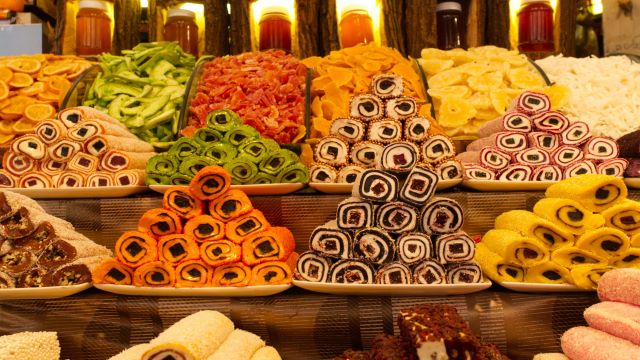
In the sun-dappled backstreets of Istanbul’s Kadıköy district, the scent of rosewater and powdered sugar drifts out of a timeworn confectionery shop. Inside, trays of jewel-toned lokum—known more widely as Turkish delight—glimmer beneath antique glass. A young shopkeeper, with practiced precision, slices through a block of pistachio-studded candy, offering a piece with the reverence one might reserve for a family heirloom.
Lokum is not just a treat—it’s a cultural artifact, layered with history, hospitality, and a craftsmanship that predates the modern sweet tooth by centuries. It has survived empires, traversed trade routes, and enchanted palates from Istanbul to London. Yet, like many traditional delicacies, its story is at risk of being sugarcoated.
A Sweet Born of Empire
Though confections made from honey and starch existed in the Middle East long before, it was in the 18th century Ottoman court that lokum, as we know it, took shape. Under the rule of Sultan Abdul Hamid I, a confectioner named Bekir Effendi introduced a firmer, starch-bound variation of the gelatinous sweet at his Istanbul shop. The shop still exists today, under the name Hacı Bekir, and is considered the birthplace of modern lokum.
Its appeal spread quickly. Lokum became a staple offering in Turkish homes, symbolizing both welcome and well-being. Over time, it made its way to the West, where it gained new notoriety after being introduced to Europe in the 19th century. The term “Turkish delight” first appeared in English travel journals, but it was C.S. Lewis’s The Lion, the Witch and the Wardrobe that forever cemented its mystique in the imagination of sweet-seekers worldwide.
The Alchemy of Lokum
At its essence, lokum is simple: sugar, water, and starch. But therein lies its genius. Unlike gelatin-based candies, lokum derives its structure from a slow-cooked alchemy between sugar syrup and a starch slurry. The process—called “starch jelling”—takes hours and unerring patience. The result is a melt-in-your-mouth texture that is neither gummy nor chewy but uniquely silken.
The traditional flavors remain unchanged—rose, lemon, mastic, and orange flower among them—though today, you’ll find a veritable spectrum. Pistachio-laced lokum remains a perennial favorite, while modern iterations experiment with chocolate coatings, dried fruit infusions, and even chili. But true artisans stick to the classical methods. “The moment you shortcut lokum, it betrays you,” says Erdal Sarıoğlu, a fourth-generation sweetmaker in Gaziantep. “It will never set right.”
Rituals and Reverence
In Turkey, lokum is more than a dessert. It plays a quiet, vital role in the rituals of life. It is served with coffee to guests—a symbol of friendship and hospitality. It accompanies the bitter coffee as a balancing gesture, both literal and metaphorical. It appears at weddings, funerals, holidays, and circumcision ceremonies, tying generations together through flavor.
During Bayram, families exchange boxes of lokum as a sign of respect and renewal. In some towns, it’s even scattered like confetti during festivals. It remains deeply embedded in the Turkish idiom: to describe something as “lokum gibi” is to call it soft, sweet, and pleasing—ideal in every way.
From Grand Bazaar to Global Palates
While lokum is ubiquitous in Turkish life, it has also seen a revival on the global stage. Artisan shops in London, Berlin, and New York now offer small-batch delights flavored with everything from bergamot to elderflower. At the same time, Turkey continues to guard its confectionery legacy. The town of Afyonkarahisar has achieved geographical indication status for its own signature lokum, made with natural spring water and distinctive flourishes.
Tourists can easily fall into the trap of mass-produced lokum—too sugary, overly perfumed, or laced with artificial gels. The true experience, however, lies in finding those family-run shops where the sweet is hand-cut, packed in delicate boxes, and dusted lovingly in cornstarch or coconut.
A Taste of Timelessness
What makes lokum endure is not just its flavor, but its function. It slows you down. In a world driven by instant gratification, this is a sweet that insists on ceremony: a cube placed gently on the tongue, a pause between sips of coffee, a moment shared between friends.
Whether bought in a crinkled paper bag from an old Istanbul shop, or elegantly boxed in a European patisserie, lokum carries with it the weight of centuries, and the warmth of Turkish hospitality. It’s more than just a delight—it’s a living tradition.
As Sarıoğlu puts it, “Lokum is our memory. You don’t eat it to be full. You eat it to remember.”
—
Recommended Reading & Sources:
- The Guardian: A short history of Turkish delight
- Istanbul Culinary Institute: The art of making lokum
- Atlas Obscura: The candy that saved a city
- UNESCO Intangible Cultural Heritage – Turkish coffee culture
- Gastronome Turkey: Regional varieties of lokum
Emine Kural is a writer and editor based in İzmir, covering the culinary intersections of culture and tradition across Anatolia and the Levant.